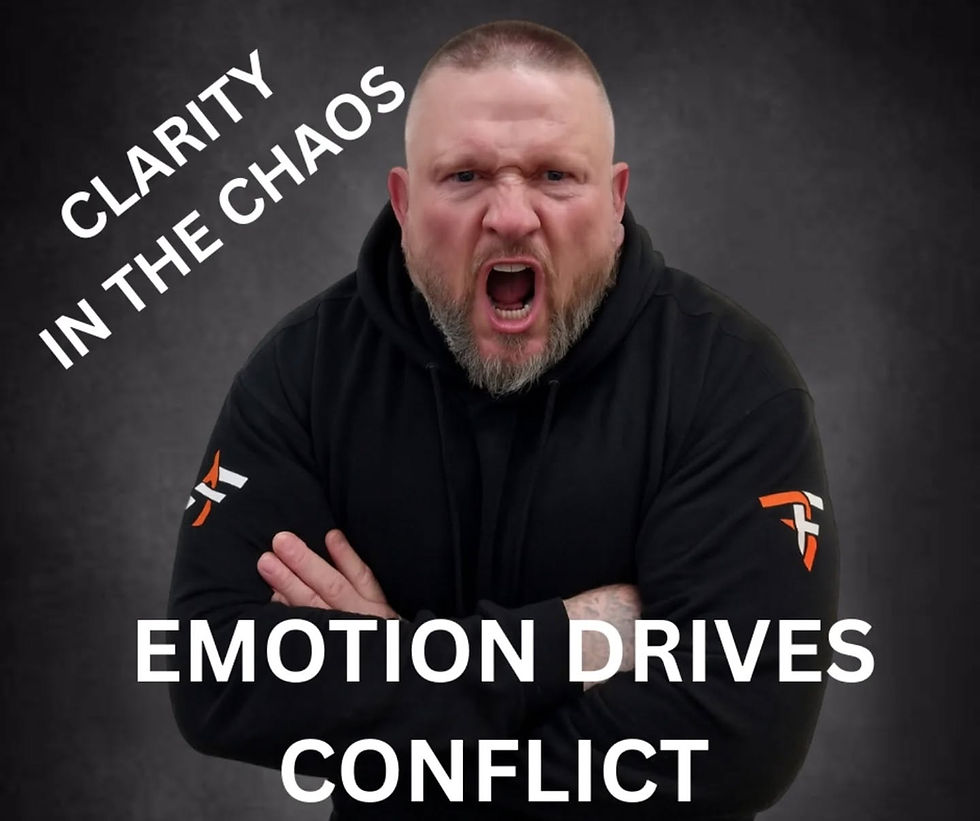
Emotion Drives Conflict

Emotion is what powers conflict long before logic ever gets involved. Most people like to believe that arguments, fights and confrontations come from differences in opinion or circumstance, but in reality they are driven by how someone feels in the moment and not what they think.
When a person feels disrespected, embarrassed, threatened or challenged, their emotional brain fires first. The rational part of the mind doesn’t lead the situation, it follows behind trying to justify whatever the emotion has already decided. That’s why people often say and do things in conflict that make no sense afterwards. Not because they’re stupid, but because they weren’t operating from logic in the first place.
Strong emotion also distorts perception. Anger narrows vision both mentally and physically. Fear exaggerates threat. Ego refuses to step back even when stepping back would be the safest option. In those states people aren’t responding to reality as it is, they’re responding to reality as their nervous system interprets it. From there, small triggers start to feel like major violations. A look, a word or a gesture takes on a meaning it doesn’t actually carry, and the conflict begins to build momentum.
Most escalation isn’t strategic. It’s emotional momentum. Ego, humiliation, jealousy, insecurity, these don’t just influence behaviour, they fuel it. Once those emotions are active, every interaction becomes filtered through them. That’s how someone who only meant to “have a word” ends up in a physical confrontation. They don’t decide to escalate, they emotionally slide into it.
There is also a point where emotion overrides choice. Once someone crosses a certain threshold of rage, fear or humiliation, they stop making decisions and start reacting. Logic can no longer reach them at that stage. That’s why arguing with an enraged or emotionally flooded person is pointless. The only real tools left are distance, timing, space and de-escalation.
One of the most powerful and dangerous emotions in conflict isn’t anger, it’s shame. Shame, especially in front of others, pushes people into restoring their image at all costs.


Comments