Understanding, Recognising and Addressing Coercive Control
- Fendo UK
- Mar 31, 2024
- 3 min read

Updated: Mar 16
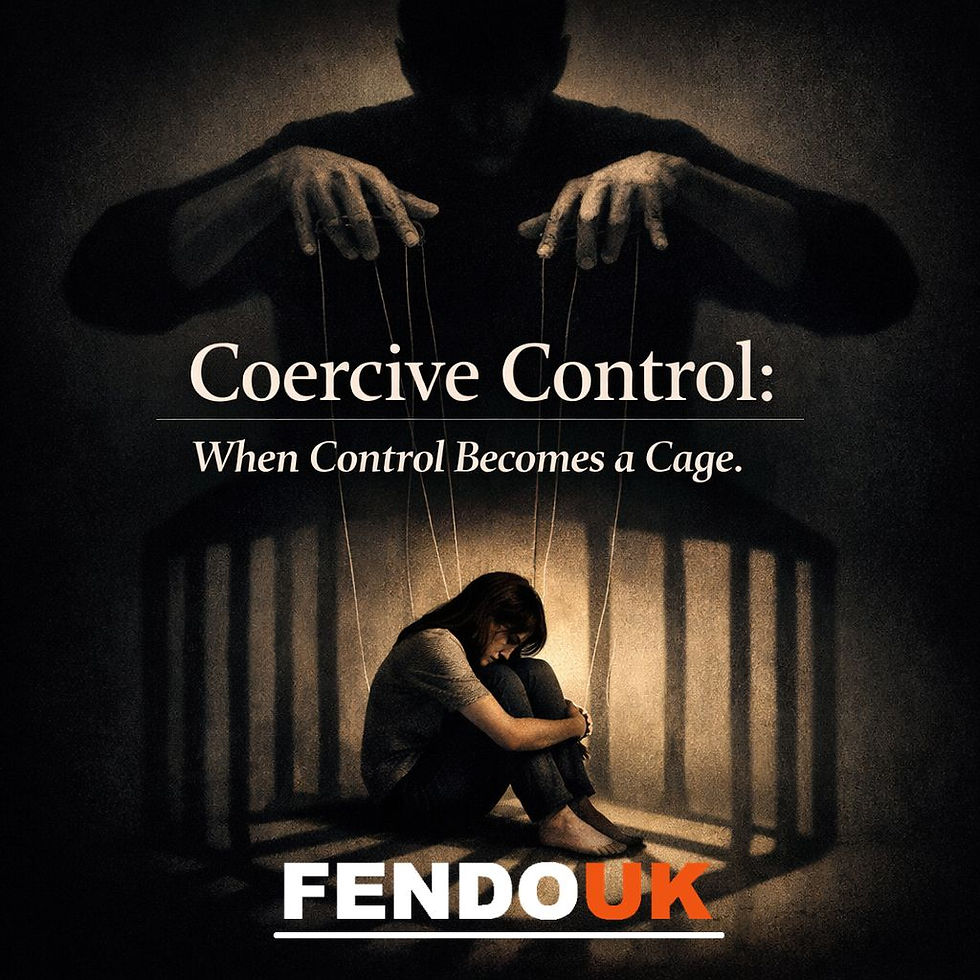
Coercive control is a subtle yet insidious form of domestic abuse that can have devastating and long lasting effects on victims. Unlike physical violence, which may leave visible scars, coercive control operates through a pattern of manipulative behaviours aimed at dominating and controlling the victim's thoughts, feelings, and actions.
In this article, we will explore what coercive control entails, its impact on victims, and strategies for recognising and addressing this form of abuse.
𝗪𝗵𝗮𝘁 𝗶𝘀 𝗖𝗼𝗲𝗿𝗰𝗶𝘃𝗲 𝗖𝗼𝗻𝘁𝗿𝗼𝗹?
Coercive control is a pattern of behaviour used by an abuser to exert power and control over their partner or family member. It often involves a range of tactics aimed at undermining the victim's autonomy, self esteem, and sense of agency.
These tactics may include:
𝗜𝘀𝗼𝗹𝗮𝘁𝗶𝗼𝗻: The abuser may isolate the victim from friends, family, and support networks, making them dependent on the abuser for emotional and practical needs.
𝗠𝗼𝗻𝗶𝘁𝗼𝗿𝗶𝗻𝗴 𝗮𝗻𝗱 𝗦𝘂𝗿𝘃𝗲𝗶𝗹𝗹𝗮𝗻𝗰𝗲: The abuser may excessively monitor the victim's activities, including phone calls, texts, emails, and social media interactions, creating a pervasive sense of surveillance and invasion of privacy.
𝗠𝗮𝗻𝗶𝗽𝘂𝗹𝗮𝘁𝗶𝗼𝗻 𝗮𝗻𝗱 𝗚𝗮𝘀𝗹𝗶𝗴𝗵𝘁𝗶𝗻𝗴: The abuser may use manipulation tactics to distort the victim's perception of reality, making them doubt their own thoughts, feelings, and memories. Gaslighting techniques may involve denial, trivialisation, and blame shifting to undermine the victim's confidence and sense of reality.
𝗜𝗻𝘁𝗶𝗺𝗶𝗱𝗮𝘁𝗶𝗼𝗻 𝗮𝗻𝗱 𝗧𝗵𝗿𝗲𝗮𝘁s: The abuser may use threats, intimidation, and coercion to instil fear and compliance in the victim. This can include verbal threats of violence, destruction of property, or threats against loved ones.
𝗙𝗶𝗻𝗮𝗻𝗰𝗶𝗮𝗹 𝗖𝗼𝗻𝘁𝗿𝗼𝗹: The abuser may control the victim's access to financial resources, such as limiting their ability to work, controlling their earnings, or withholding money for basic needs.
𝗘𝗺𝗼𝘁𝗶𝗼𝗻𝗮𝗹 𝗔𝗯𝘂𝘀𝗲: Coercive control often involves emotional abuse, including insults, humiliation, degradation, and manipulation of the victim's emotions to maintain power and control.
𝗧𝗛𝗘 𝗜𝗠𝗣𝗔𝗖𝗧 𝗢𝗙 𝗖𝗢𝗘𝗥𝗖𝗜𝗩𝗘 𝗖𝗢𝗡𝗧𝗥𝗢𝗟
The effects of coercive control can be profound and far reaching, impacting every aspect of the victim's life.
Some common effects include:
𝗣𝘀𝘆𝗰𝗵𝗼𝗹𝗼𝗴𝗶𝗰𝗮𝗹 𝗧𝗿𝗮𝘂𝗺𝗮: Victims of coercive control may experience anxiety, depression, post traumatic stress disorder (PTSD), and other mental health issues as a result of the ongoing abuse and manipulation.
𝗜𝘀𝗼𝗹𝗮𝘁𝗶𝗼𝗻 𝗮𝗻𝗱 𝗔𝗹𝗶𝗲𝗻𝗮𝘁𝗶𝗼𝗻: Coercive control can leave victims feeling isolated and cut off from support networks, exacerbating feelings of loneliness, helplessness, and dependency on the abuser.
𝗣𝗵𝘆𝘀𝗶𝗰𝗮𝗹 𝗛𝗲𝗮𝗹𝘁𝗵 𝗖𝗼𝗻𝘀𝗲𝗾𝘂𝗲𝗻𝗰𝗲𝘀: The stress and anxiety caused by coercive control can have physical health consequences, including headaches, digestive issues, high blood pressure, and increased risk of chronic illness.
𝗜𝗺𝗽𝗮𝗰𝘁 𝗼𝗻 𝗖𝗵𝗶𝗹𝗱𝗿𝗲𝗻: Coercive control within the family dynamic can have detrimental effects on children who witness or experience the abuse, leading to emotional and behavioural problems, difficulty forming healthy relationships, and long term psychological trauma.
𝗥𝗘𝗖𝗢𝗚𝗡𝗜𝗦𝗜𝗡𝗚 𝗔𝗡𝗗 𝗔𝗗𝗗𝗥𝗘𝗦𝗦𝗜𝗡𝗚 𝗖𝗢𝗘𝗥𝗖𝗜𝗩𝗘 𝗖𝗢𝗡𝗧𝗥𝗢𝗟
Recognising coercive control can be challenging, as it often occurs gradually and subtly, making it difficult for victims to identify the abuse.
However, there are signs and red flags to watch out for, including:
𝗜𝘀𝗼𝗹𝗮𝘁𝗶𝗼𝗻 𝗳𝗿𝗼𝗺 𝗙𝗿𝗶𝗲𝗻𝗱𝘀 𝗮𝗻𝗱 𝗙𝗮𝗺𝗶𝗹𝘆: The victim may become increasingly isolated from friends, family, and support networks, often at the order of the abuser.
𝗖𝗼𝗻𝘀𝘁𝗮𝗻𝘁 𝗠𝗼𝗻𝗶𝘁𝗼𝗿𝗶𝗻𝗴 𝗮𝗻𝗱 𝗦𝘂𝗿𝘃𝗲𝗶𝗹𝗹𝗮𝗻𝗰𝗲: The abuser may exhibit controlling behaviours such as monitoring the victim's communications, tracking their movements, or demanding constant updates on their whereabouts.
𝗠𝗮𝗻𝗶𝗽𝘂𝗹𝗮𝘁𝗶𝘃𝗲 𝗮𝗻𝗱 𝗚𝗮𝘀𝗹𝗶𝗴𝗵𝘁𝗶𝗻𝗴 𝗕𝗲𝗵𝗮𝘃𝗶𝗼𝘂𝗿𝘀: The abuser may engage in gaslighting tactics, making the victim doubt their own perceptions, memories, and experiences.
𝗙𝗶𝗻𝗮𝗻𝗰𝗶𝗮𝗹 𝗗𝗲𝗽𝗲𝗻𝗱𝗲𝗻𝗰𝗲: The victim may have limited access to financial resources, with the abuser controlling their finances and limiting their ability to work or access money.
𝗘𝗺𝗼𝘁𝗶𝗼𝗻𝗮𝗹 𝗔𝗯𝘂𝘀𝗲 𝗮𝗻𝗱 𝗜𝗻𝘁𝗶𝗺𝗶𝗱𝗮𝘁𝗶𝗼𝗻: The victim may experience emotional abuse, insults, threats, and intimidation from the abuser, creating a climate of fear and control.
If you or someone you know is experiencing coercive control, it's essential to seek help and support. This may include reaching out to trusted friends or family members, contacting a domestic violence hotline or support organisation, or seeking assistance from Police or legal professionals.
Remember that coercive control is a form of domestic abuse, and no one deserves to live in fear or oppression. By recognising the signs of coercive control and taking action to address it, victims can begin to reclaim their autonomy, safety, and well being.
DJN
Fendo UK


Comments